
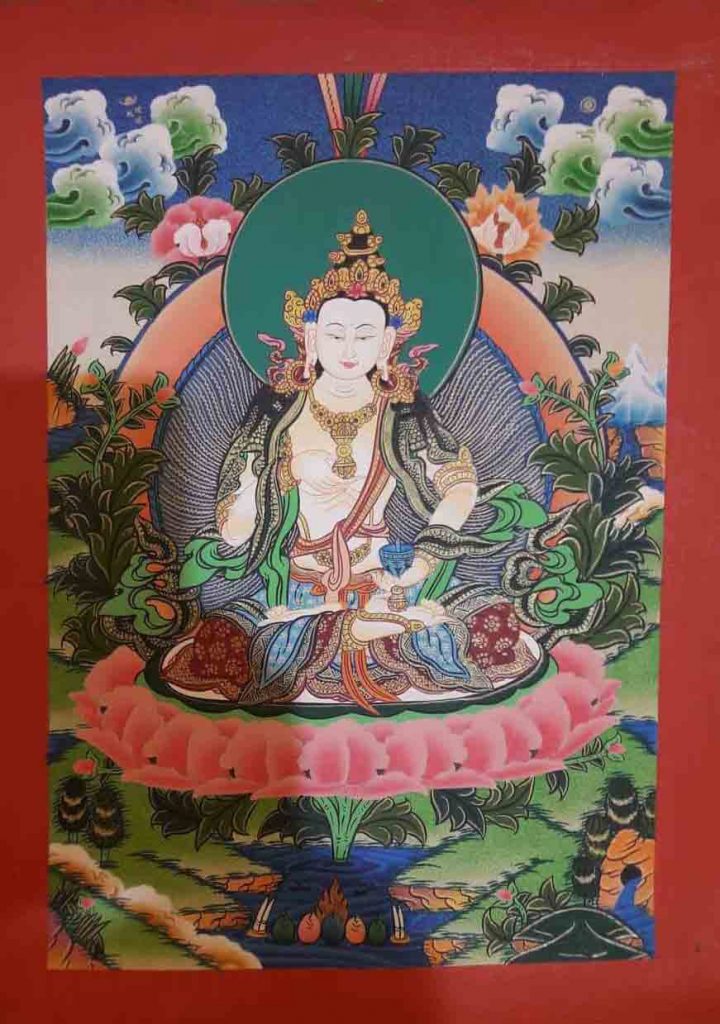
The painting made on cloth (cotton or silk canvas) is called SCROLL PAINTING. It is called PAUVA in Nepal and Thanka (Thangka) in Tibet and China. Pauva (Thanka) is a traditional Nepali Art that uses intense colors and fine detail works to depict divinities or patterns and is hung on the walls. Most of the artists of Pauva (Thanka) are anonymous. The artists give emphasis on symmetry order, balance and harmony. It depicts the figures like God, Goddesses, Temples, Shrines, Stupas, Trees, Bones, Flags, Corpses, Children, Saints, Monks, dancers, devotees, dragons, animals etc. It can be easily rolled up and transported (carried). The scroll painting is further divided into PATA Painting and MANDALA Painting.

The painting in which the main deity is in the center and surrounded by other deities is called PATA and the painting in which an object or a symbol (swastika) lies in the centre and surrounded by deities in all the sides is called MANDALA. In pata painting, instead of single subject matter, long stories are included. It narrates the stories from religious books like the Ramayana, the Mahabharata, Bhagwat Purana, Krishna Leela, scenes from Buddha’s life etc. So it is also called narrative scroll painting. It is not structured geometrically giving emphasis to the central deity. It represents narrative pictures on a large horizontal bond and sometimes pictures are separated in several segments. The narrative subject matter of painting determines the length of Pata. That is why the shape of Pata painting is rectangular (long) shape. In mandala, the principal deity resides at the centre within the circle and the circles are surrounded by the other circles. Subsidiary deities are within and outside the circles and squares around the principal deity.
The figures and colors in Pauva (Thanka) are in tightly structured order and in this genre of painting no shade is used. That means Pauva (Thanka) are painted according to traditional iconographic rules. Colors are determined by religious needs and the picture surface is always undergoing with uniformly luminous hues and tones. Here Philosophical, Ritualistic or Magical themes have been represented through rounded and sweeping lines and color has almost a modeling effect.
All Pauvas (Thankas) are painted with coarse cotton or silk which is primed with conch shell to provide smooth surface. The outline is carefully drawn in red or black and filled with colors. The pigments are derived from vegetable extracts and the principle binding material gum readably soluble in water. Paintings are executed in opaque water colors and opacity is derived from binding medium.
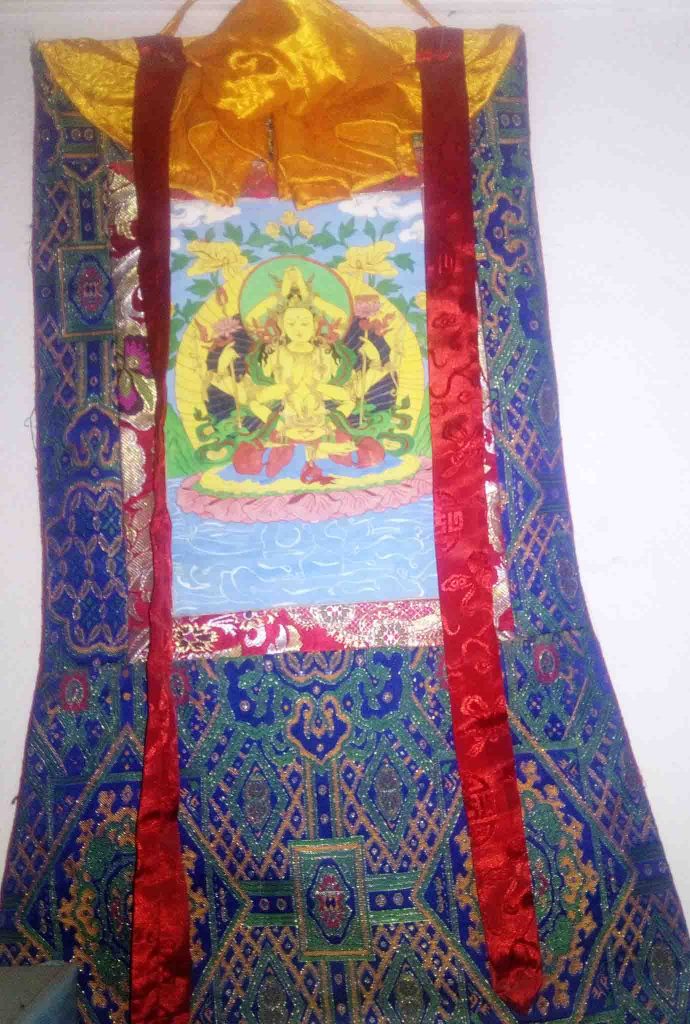
There is a great relationship between the Buddha and Pauva (Thanka) as Buddha’s Life and his previous lives, Buddhas and Bodhisattvas, Meditational deities, Dakas and Dakinis, Dharmapalas and Mandalas and Stupas, Illustrations of the Dharma are the subject matter or theme of Pauva (Thanka). Followers of Mahayana Buddhism are given credit for introducing PAUVA (Thanka) in Nepal. Buddha’s important events in his life, such as the birth, enlightenment at Bodhgaya, the first teaching at Sarnath, and his mahaparinirvana remain important and favorite themes for Pauva and Thanka lovers since ancient times.
Pauva (Thanka) will occupy the bare spaces of the walls of a room. The room becomes serene and an ideal place to relax, reflect and rejuvenate. In accordance with the religious culture, the Thangka to be kept at the worship room sanctifies with holy water muttering mantras to enliven (cheer up) Pauva (thanka) mystic power. The devotee bows head before it at the time of worship especially in the morning time. By worship of deities in Pauva (Thanka) like Tara (dolma) goddess results lucrative for the business and Dharmapala protects from the hazardous, calamity, subduing enemies, every accident and fulfilling ones desire in believed with empty heart. Pauva (Thanka) is adds extra fashion and decorate the room, offices and one can also practice meditation and mindfulness with it because the ordered geometric structure gives the visual support for meditation and concentration.
If you took time to read this, thank you very much. For order please message: marketing@imartisan.org. Please visit our official website: www.imartisan.org
Điều mình hài lòng là ghd sports latest version hoạt động khá tốt cả buổi tối.} thấy ít gặp lỗi lag hơn mình nghĩ ban đầu. TONY10-13